Mastering RCC Bridge Projects: A Comprehensive Guide to Billing Engineering Techniques
- BHADANIS QUANTITY SURVEYING ONLINE TRAINING INSTITUTE

- Apr 7
- 2 min read
Reinforced concrete (RCC) bridge construction involves complex processes that require precise financial management. Billing engineering plays a crucial role in ensuring projects stay on budget, payments are timely, and disputes are minimized. This guide explores practical billing techniques tailored for RCC bridge projects, helping civil engineers and billing professionals navigate the financial aspects with confidence.
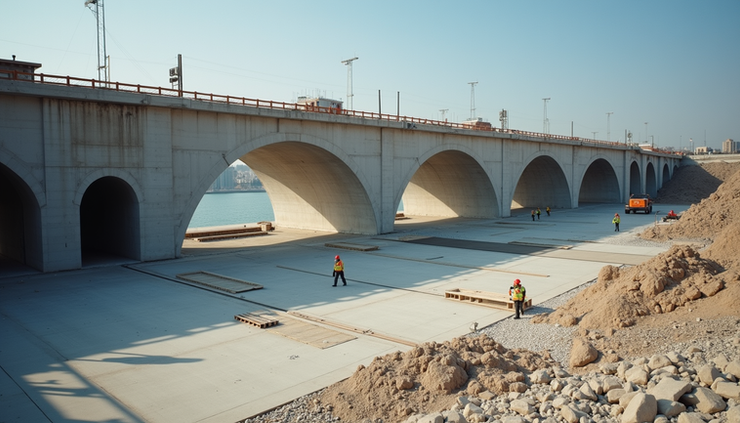
Understanding RA Bill Preparation for Bridge Projects
Running Account (RA) bills are essential for tracking progress and securing payments during bridge construction. Preparing accurate RA bills requires attention to detail, especially when dealing with multiple components like pile foundations, abutments, and deck slabs.
Key Elements of RA Bill Preparation
Quantity-rate calculations: Use dynamic Excel templates that automatically calculate quantities and rates for each item.
Material deductions: Account for materials supplied by the client or recovered from site to avoid overbilling.
GST compliance: Ensure the bill reflects applicable Goods and Services Tax (GST) rates and deductions.
Practical Example
Imagine preparing an RA bill for a 500-meter RCC bridge. The bill should itemize:
Pile foundations
Abutments
Pier caps
Deck slabs
Each item must include quantities measured on-site, agreed rates, and applicable taxes. Using an Excel template designed for bridge projects can automate calculations and reduce errors.
Resolving Quantity Mismatches
Discrepancies between contractor and client measurements often arise. For example, a 15% quantity mismatch for pier caps can be resolved by:
Conducting joint re-measurements
Referring to contractual clauses on measurement disputes
Adjusting the bill accordingly
This approach promotes transparency and prevents payment delays.
Managing GST-Compliant Billing for Bridge Materials
GST compliance is a critical aspect of billing in RCC bridge projects. Different materials attract different GST rates, and tracking Input Tax Credit (ITC) is necessary for accurate accounting.
GST Rates for Common Bridge Materials
Steel and cement: 18%
Concrete: 5%
Using Excel Templates for GST Billing
An invoice format that breaks down GST for each material type helps maintain clarity. It should also track ITC to ensure the project benefits from tax credits.
Example of GST Reconciliation
Consider reconciling GST for 1,200 metric tons of steel procured from three suppliers across different states. The billing engineer must:
Calculate GST based on the place of supply rules
Adjust for interstate tax differences
Ensure ITC claims are accurate and documented
Case Study: Correcting ITC Misstatements
Incorrect ITC claims can lead to penalties. A case where ITC was overstated was resolved by:
Reviewing purchase invoices
Cross-checking GST returns
Amending the billing records to reflect accurate ITC
This process safeguards the project's financial health.

Benefits of Specialized Billing Engineering Training
Taking a focused course on RCC bridge construction billing equips professionals with:
Practical tools like customizable Excel templates
Real-world case studies to handle disputes and tax issues
Skills to prepare accurate bills that reduce payment delays
Knowledge to ensure compliance with tax laws and contractual terms
Such training supports smooth financial operations from project start to closure.
Comments